
Introduction
India’s defense procurement decisions have long been a subject of global interest due to the country’s strategic importance and its significant military modernization efforts. Recently, reports have emerged suggesting that India may reconsider its deal with France for 26 Rafale Marine fighter jets, valued at approximately ₹63,000 crore (around €7 billion), due to France’s refusal to share the jets’ source code. Instead, some sources indicate India might turn to Russia to procure the fifth-generation Su-57 stealth fighter jets. This report analyzes the media coverage surrounding these claims, exploring the reasons behind the potential shift, the geopolitical implications, and the credibility of the narratives. Written in simple English, this report aims to make the complex topic accessible to the general public while maintaining the analytical rigor typical of think tank reports.
Background of the Rafale Marine Deal and Source Code Issue
India signed an Inter-Governmental Agreement (IGA) with France in April 2025 to acquire 26 Rafale Marine jets for the Indian Navy, primarily to operate from the indigenous aircraft carrier INS Vikrant. This deal followed a 2016 agreement for 36 Rafale jets for the Indian Air Force (IAF), marking a deepening defense partnership with France. The Rafale, a 4.5-generation multirole fighter, is equipped with advanced systems like the Active Electronically Scanned Array (AESA) radar and Modular Mission Computer (MMC), which form the aircraft’s electronic backbone.
The source code, which controls these systems, is critical for integrating India’s indigenous weapons, such as the Astra Mk1 air-to-air missile and the Smart Anti-Airfield Weapon (SAAW). Without access to the source code, India relies on Dassault Aviation, the French manufacturer, for upgrades and modifications, which increases costs and delays defense planning. France’s reluctance to share this proprietary technology stems from concerns about protecting intellectual property and preventing leaks to geopolitical rivals like Russia or China.
Media reports suggest that this refusal has sparked frustration in India, particularly as it aligns with the Atmanirbhar Bharat (Self-Reliant India) initiative, which emphasizes reducing dependence on foreign vendors. Some outlets claim India is now considering canceling the Rafale Marine deal and exploring Russia’s Su-57, which reportedly comes with offers of full technology transfer and local production under the Make in India initiative.
Media Coverage: Key Themes and Narratives
The media coverage of this issue can be categorized into three main themes: India’s push for technological sovereignty, France’s stance on intellectual property, and Russia’s strategic pitch for the Su-57. These themes are discussed below, drawing from various sources to present a balanced view.
1. India’s Quest for Technological Sovereignty
Indian media outlets, such as India Sentinels and India.com, emphasize India’s desire to integrate indigenous weapons and reduce reliance on foreign suppliers. The refusal to share the Rafale’s source code is portrayed as a barrier to India’s defense autonomy, particularly for operations in high-altitude regions like Ladakh or against Pakistan’s JF-17 jets. The coverage highlights the IAF’s firm stance on obtaining the source code, citing past experiences with the Mirage 2000, where similar restrictions limited weapon integration.
Posts on X reflect public sentiment, with users like @vlmehra and @HindutvaMaratha arguing that France’s refusal signals a lack of trust in the India-France partnership. They suggest that India should pivot to Russia, which has historically been more open to technology transfer. For example, @vlmehra stated, “If France withholds source code, it signals monopoly and coercion, not partnership. Russia is ready with full tech transfer on SU-57.” This sentiment is echoed in reports by Bharat Articles, which question whether India should cancel the Rafale Marine deal and explore indigenous options like the Advanced Medium Combat Aircraft (AMCA) or Russia’s Su-57.
2. France’s Reluctance and Geopolitical Concerns
International and Indian media, including Defence Security Asia and The Times of India, report that France’s refusal is driven by concerns over intellectual property and strategic risks. The Rafale’s source code encapsulates decades of French research and development, and Dassault Aviation fears that sharing it could lead to leaks, especially given India’s complex security environment and historical ties with Russia.
Some outlets, like Euronews, highlight the strength of India-France relations despite this friction, noting the recent ₹63,000 crore deal as evidence of mutual trust. France views India as a key partner in countering Chinese influence in the Indo-Pacific, while India values France’s reliability compared to Russia’s declining arms export capabilities. However, the source code issue has sparked debates about whether France prioritizes commercial interests over strategic partnership.
3. Russia’s Pitch for the Su-57
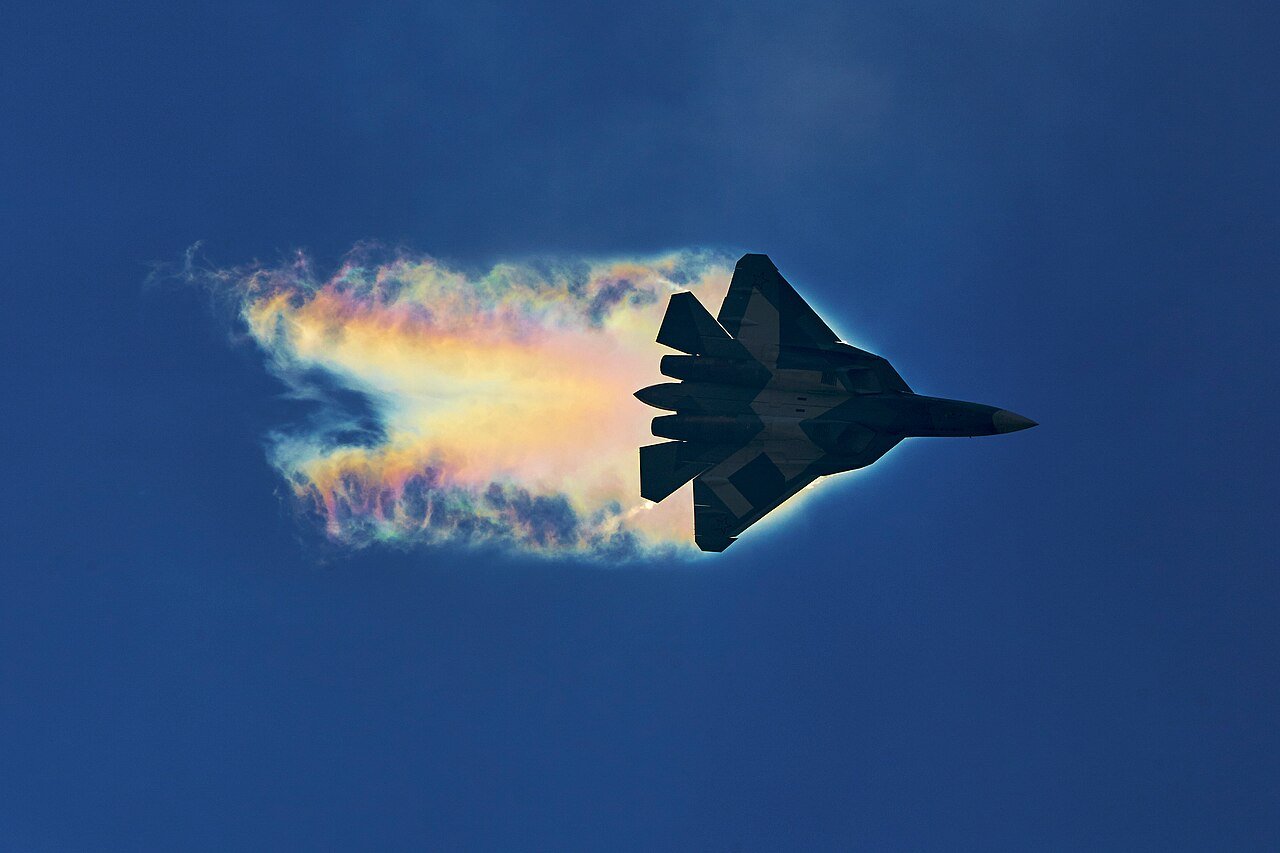
Russian media and defense circles, as reported by The Hindu and News18, have actively promoted the Su-57E as a “Rafale-beater,” emphasizing its fifth-generation stealth capabilities, advanced avionics, and potential for hypersonic weapon integration. Russia’s state arms exporter, Rosoboronexport, has offered to localize Su-57 production in India, leveraging existing infrastructure for Su-30MKI manufacturing. This offer aligns with India’s Make in India initiative and contrasts with France’s restrictive stance.
However, some reports, such as those from EurAsian Times, suggest that Russian media may be exaggerating Pakistan’s claims of downing Rafale jets during Operation Sindoor to undermine the Rafale’s reputation and boost the Su-57’s appeal. For instance, Russian outlets like Reporter have claimed that the Rafale underperformed against Pakistan’s Chinese-made J-10C jets, a narrative that India has refuted as false propaganda.
Geopolitical Implications
The potential cancellation of the Rafale Marine deal and a shift to the Su-57 would have significant geopolitical ramifications. India’s defense procurement has historically balanced relations with Western powers, Russia, and its own indigenous programs. The following points outline the implications:
- India-France Relations: Canceling the Rafale deal could strain ties with France, a key partner in the Indo-Pacific. However, some analysts suggest that India could negotiate a middle path, such as phased code-sharing for specific projects, to preserve the partnership while addressing sovereignty concerns.
- India-Russia Ties: A shift to the Su-57 would reinforce India’s long-standing defense relationship with Russia, which has waned in recent years due to India’s pivot toward Western suppliers. Russia’s offer of technology transfer and local production is appealing, but the Su-57’s readiness and performance remain uncertain, as it has not been widely exported.
- Regional Power Dynamics: Reports of Rafale losses in clashes with Pakistan’s J-10C jets, though unverified, have raised questions about the jet’s combat effectiveness against Chinese-supplied platforms. A shift to the Su-57 could be seen as a response to this perceived vulnerability, but it risks escalating tensions with China and Pakistan, who are closely aligned with Russia.
- Indigenous Defense Goals: Canceling the Rafale deal could accelerate India’s focus on indigenous platforms like the AMCA and Twin Engine Deck Based Fighter (TEDBF). However, these programs are years away from operational readiness, making a stopgap solution like the Su-57 or additional Rafales necessary.
Credibility and Bias in Media Coverage
The media coverage of this issue is marked by varying degrees of credibility and bias. Indian sources, such as India Sentinels and The Times of India, focus on national interests and technological sovereignty, often portraying France’s refusal as a betrayal. These reports are grounded in India’s defense priorities but may downplay the complexities of intellectual property rights.
Russian media, as noted by EurAsian Times, appear to amplify Pakistan’s unverified claims of downing Rafales to promote the Su-57. This narrative aligns with Russia’s strategic interest in regaining India as a major arms buyer, especially as its global exports have plummeted by 92% from 2021 to 2024.
Western media, including Reuters and CNN, provide a more neutral perspective but rely heavily on anonymous sources when reporting Rafale losses, raising questions about their intent. Some analysts suggest that the U.S. may be using these reports to push its F-35 jets in India’s $15 billion Multi-Role Fighter Aircraft (MRFA) program.
X posts reflect polarized public sentiment, with some users advocating for the Su-57 as a symbol of India’s autonomy, while others criticize the Rafale deal as a strategic misstep. These posts, while indicative of public mood, lack verified evidence and should be treated as inconclusive.
Analysis and Recommendations
The media coverage reveals a complex interplay of national interests, geopolitical rivalries, and defense priorities. India’s frustration with France’s refusal to share the Rafale source code is understandable, given its push for self-reliance. However, canceling the Rafale Marine deal carries risks, including diplomatic fallout and delays in bolstering naval aviation. The Su-57, while promising technology transfer, is an unproven platform with limited export success, and India’s past withdrawal from a joint Su-57 program in 2018 suggests skepticism about its capabilities.
For India, the following recommendations emerge:
- Negotiate with France: India should press for conditional source code access, such as for specific weapon integrations, to balance sovereignty with partnership.
- Diversify Procurement: Exploring options like the Su-57 or indigenous platforms can reduce dependence on a single vendor, but decisions should be based on rigorous testing and long-term sustainability.
- Counter Propaganda: India should address unverified claims of Rafale losses through transparent communication to maintain public confidence in its defense capabilities.
- Accelerate Indigenous Programs: Investing in the AMCA and TEDBF will ensure long-term autonomy, but interim solutions like the Rafale or Su-57 are necessary to bridge the gap.
Conclusion
The media coverage of India’s potential cancellation of the Rafale Marine deal and shift to the Su-57 reflects a mix of strategic concerns, geopolitical agendas, and public sentiment. While Indian outlets emphasize technological sovereignty, Russian media may be leveraging unverified claims to promote the Su-57, and Western sources raise questions about their motives. For the ordinary reader, this issue underscores the challenges of balancing national pride, military needs, and international partnerships. India’s decision will shape its defense posture for decades, requiring careful consideration of both immediate needs and long-term goals. By negotiating firmly with France, diversifying procurement, and investing in indigenous capabilities, India can navigate this complex landscape while maintaining its strategic autonomy.
Discover more from CRISA
Subscribe to get the latest posts sent to your email.

