How India Made the S-400 Air Defence System Shine Brighter Than Russia
HomeCommentaryHow India Made the S-400 Air Defence System Shine Brighter Than Russia
Discover how India enhanced the Russian S-400 air defence system, outperforming its original maker through local software integration, synergy with indigenous systems, and superior adaptability during Operation Sindoor, while countering Pakistan’s less effective Chinese systems.
The S-400 Triumf, known as Sudarshan Chakra in India, is one of the world’s most advanced air defence systems, developed by Russia. It can detect and destroy a wide range of aerial threats, such as drones, missiles, and fighter jets, up to 400 kilometers away. While Russia has used the S-400 in conflicts like Ukraine with mixed results, India’s use of the system during Operation Sindoor in May 2025 was a remarkable success. Operation Sindoor was India’s response to a terror attack in Pahalgam, targeting terrorist bases in Pakistan and Pakistan-occupied Kashmir. When Pakistan retaliated with drones and missiles, India’s S-400 systems neutralized these threats with precision. This article explores how India used the S-400 more effectively than Russia by focusing on local software integration, combining it with indigenous systems, adapting it to India’s needs, and facing less effective Chinese systems used by Pakistan.
1. Local Software and Technology Integration
India didn’t just use the S-400 as it came from Russia. Instead, the Indian Armed Forces enhanced it with homegrown technology and software to make it more effective. The S-400’s radar and command systems were integrated with India’s own Integrated Air Command and Control System (IACCS), developed by Bharat Electronics Limited (BEL). This system connects radars, missile batteries, and airbases across India, creating a unified picture of the airspace. By linking the S-400 with IACCS, India ensured that the system could quickly share data with other defence assets, like airborne early warning systems and ground radars. This allowed the S-400 to track and engage targets more accurately, even in complex scenarios where multiple threats were incoming.
Posts on X have highlighted that India’s customization of the S-400’s software made it more reliable and precise compared to Russia’s use in Ukraine, where the system struggled against Western-supplied weapons. India’s engineers tweaked the S-400’s software to better handle the chaotic battlefield conditions of South Asia, where threats like low-flying drones and fast missiles are common. This local touch turned the S-400 into a more responsive and effective shield for India’s airspace.
2. Integration with Indigenous Air Defence Systems
India’s air defence is not just about the S-400. It’s a multi-layered network that combines Russian, Israeli, and Indian-made systems, working together seamlessly. During Operation Sindoor, the S-400 was paired with indigenous systems like the Akash missile system, which has a range of 45 kilometers and is excellent against drones and fighter jets. The Akash system, developed by the Defence Research and Development Organisation (DRDO), proved its worth by neutralizing multiple drones in a 2023 exercise. Other systems, like the Barak-8 (a joint Indo-Israeli missile with a 70-100 km range) and Quick Reaction Surface-to-Air Missiles (QRSAM), were also integrated into this network.
Quick Reaction Surface to Air Missile (QRSAM) of the DRDO, successfully flight tested from ITR Chandipur, off the Odisha Coast on July 03, 2017.
The Indian Army’s Akashteer system, a battlefield command framework, played a key role in coordinating these systems. It ensured that the right missile was used for the right threat—for example, the S-400 handled long-range, high-value targets like missiles, while Akash and QRSAM tackled shorter-range threats like drones. This teamwork made India’s defence network more flexible and effective than Russia’s, which often relies on the S-400 alone without such a robust integration of other systems. The result was a 100% interception rate during Operation Sindoor, as reported by Firstpost, showcasing the power of India’s layered defence.
3. Excellent Adaptability by the Indian Armed Forces
The Indian Armed Forces showed remarkable skill in adapting the S-400 to their unique needs. India deployed four S-400 squadrons strategically—one in Pathankot to protect Jammu and Kashmir and Punjab, and another covering Rajasthan and Gujarat. This placement allowed the S-400 to counter threats from both Pakistan and China. During Operation Sindoor, the system successfully intercepted Pakistani drones and missiles aimed at 15 Indian cities, including Jammu, Amritsar, and Ludhiana, preventing any damage to military or civilian assets.
The Indian Air Force (IAF) also demonstrated the S-400’s adaptability in exercises before Operation Sindoor. In a 2024 exercise, the system achieved an 80% success rate against simulated enemy aircraft, as reported by Bharat Shakti. The IAF trained extensively to use the S-400’s advanced radars, which can track up to 300 targets and engage 36 at once, even in environments with heavy electronic jamming. Unlike Russia, which faced challenges integrating the S-400 with other systems in Ukraine, India’s forces ensured smooth coordination with fighter jets like the Rafale and indigenous radars like Aslesha and Bharani. This adaptability allowed India to maximize the S-400’s potential, making it a cornerstone of its air defence strategy.
4. Low-Quality Chinese Systems Used by Pakistan
Pakistan’s air defence, heavily reliant on Chinese systems like the HQ-9, was no match for India’s S-400 during Operation Sindoor. The HQ-9, with a range of 100-200 kilometers, is less advanced than the S-400, which boasts a 400-kilometer range and superior radar technology. The HQ-9’s radar, based on older S-300 technology, struggles to track multiple targets or counter advanced threats like India’s BrahMos missiles, which travel at Mach 3+. Pakistan also uses systems like the LY-80 (40-70 km range) and the French Crotale, but these are outdated or limited against high-speed or stealth targets.
French Crotale Air Defence System
During Operation Sindoor, Pakistan launched a barrage of drones and missiles, including Chinese-made PL-15 missiles and Turkish drones, but India’s S-400 and integrated systems neutralized them all. A comparative analysis by the Indian Defence Research Wing noted that Pakistan’s HQ-9 lacks the S-400’s radar sophistication and engagement capacity, making it vulnerable to saturation attacks. This technological gap gave India a clear edge, allowing the S-400 to dominate the airspace and protect key installations without a single hit, as confirmed by government sources.
Conclusion
India’s success with the S-400 during Operation Sindoor shows how smart integration and adaptation can make a good system great. By combining the S-400 with local software and indigenous systems like Akash and Barak-8, India created a powerful, multi-layered defence network. The Indian Armed Forces’ ability to tailor the system to their needs, along with the technological inferiority of Pakistan’s Chinese systems, ensured a decisive victory. This achievement not only strengthened India’s security but also sent a strong message to adversaries like Pakistan and China about its advanced air defence capabilities.
Visited 15 times, 1 visit(s) today
Discover more from CRISA
Subscribe to get the latest posts sent to your email.
All material appearing on the CRISA website ("content") is protected by copyright under Indian Copyright laws and is the property of CRISA. You may not copy, reproduce, distribute, publish, display, perform, modify, create derivative works, transmit, or in any way exploit any such content, nor may you distribute any part of this content over any network, including a local area network, sell or offer it for sale, or use such content to construct any kind of database.
Discover more from CRISA
Subscribe now to keep reading and get access to the full archive.

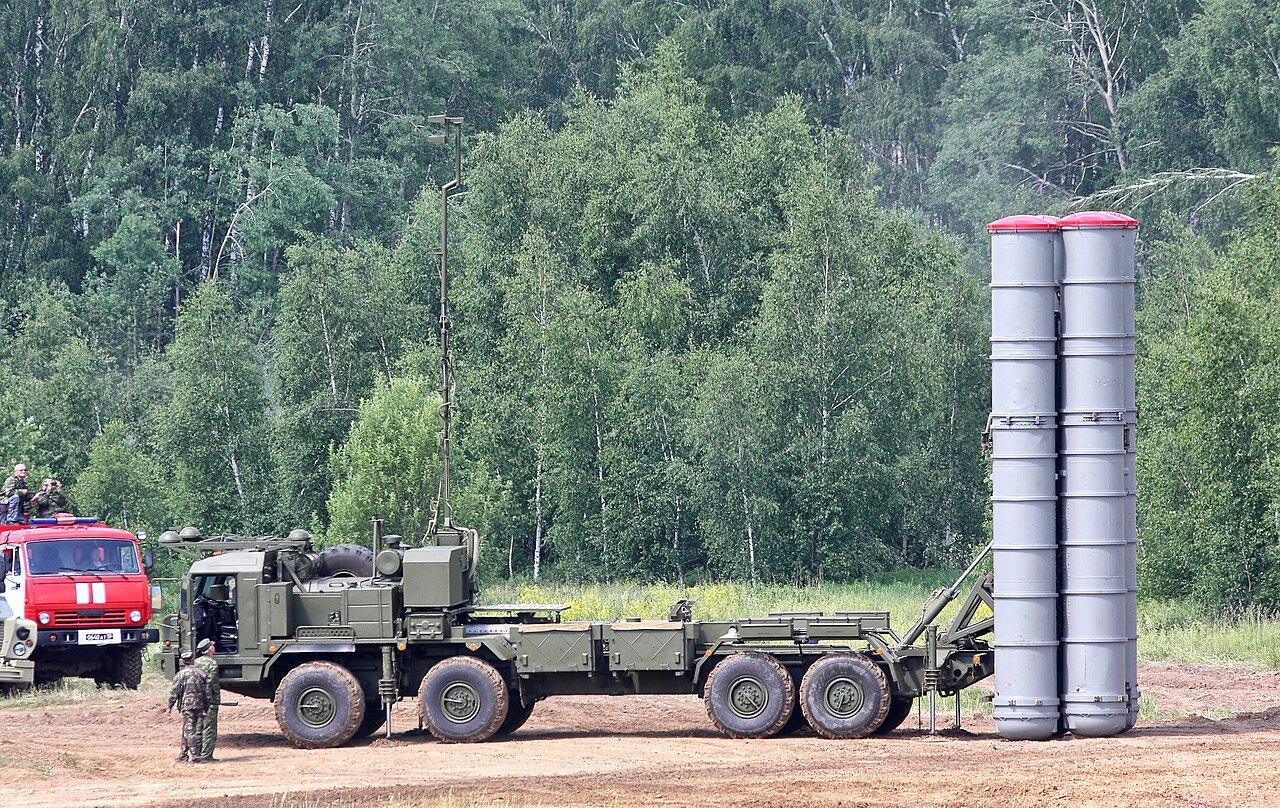

The S-400 Triumf, known as Sudarshan Chakra in India, is one of the world’s most advanced air defence systems, developed by Russia. It can detect and destroy a wide range of aerial threats, such as drones, missiles, and fighter jets, up to 400 kilometers away. While Russia has used the S-400 in conflicts like Ukraine with mixed results, India’s use of the system during Operation Sindoor in May 2025 was a remarkable success. Operation Sindoor was India’s response to a terror attack in Pahalgam, targeting terrorist bases in Pakistan and Pakistan-occupied Kashmir. When Pakistan retaliated with drones and missiles, India’s S-400 systems neutralized these threats with precision. This article explores how India used the S-400 more effectively than Russia by focusing on local software integration, combining it with indigenous systems, adapting it to India’s needs, and facing less effective Chinese systems used by Pakistan.
1. Local Software and Technology Integration
India didn’t just use the S-400 as it came from Russia. Instead, the Indian Armed Forces enhanced it with homegrown technology and software to make it more effective. The S-400’s radar and command systems were integrated with India’s own Integrated Air Command and Control System (IACCS), developed by Bharat Electronics Limited (BEL). This system connects radars, missile batteries, and airbases across India, creating a unified picture of the airspace. By linking the S-400 with IACCS, India ensured that the system could quickly share data with other defence assets, like airborne early warning systems and ground radars. This allowed the S-400 to track and engage targets more accurately, even in complex scenarios where multiple threats were incoming.
Posts on X have highlighted that India’s customization of the S-400’s software made it more reliable and precise compared to Russia’s use in Ukraine, where the system struggled against Western-supplied weapons. India’s engineers tweaked the S-400’s software to better handle the chaotic battlefield conditions of South Asia, where threats like low-flying drones and fast missiles are common. This local touch turned the S-400 into a more responsive and effective shield for India’s airspace.
2. Integration with Indigenous Air Defence Systems
India’s air defence is not just about the S-400. It’s a multi-layered network that combines Russian, Israeli, and Indian-made systems, working together seamlessly. During Operation Sindoor, the S-400 was paired with indigenous systems like the Akash missile system, which has a range of 45 kilometers and is excellent against drones and fighter jets. The Akash system, developed by the Defence Research and Development Organisation (DRDO), proved its worth by neutralizing multiple drones in a 2023 exercise. Other systems, like the Barak-8 (a joint Indo-Israeli missile with a 70-100 km range) and Quick Reaction Surface-to-Air Missiles (QRSAM), were also integrated into this network.
The Indian Army’s Akashteer system, a battlefield command framework, played a key role in coordinating these systems. It ensured that the right missile was used for the right threat—for example, the S-400 handled long-range, high-value targets like missiles, while Akash and QRSAM tackled shorter-range threats like drones. This teamwork made India’s defence network more flexible and effective than Russia’s, which often relies on the S-400 alone without such a robust integration of other systems. The result was a 100% interception rate during Operation Sindoor, as reported by Firstpost, showcasing the power of India’s layered defence.
3. Excellent Adaptability by the Indian Armed Forces
The Indian Armed Forces showed remarkable skill in adapting the S-400 to their unique needs. India deployed four S-400 squadrons strategically—one in Pathankot to protect Jammu and Kashmir and Punjab, and another covering Rajasthan and Gujarat. This placement allowed the S-400 to counter threats from both Pakistan and China. During Operation Sindoor, the system successfully intercepted Pakistani drones and missiles aimed at 15 Indian cities, including Jammu, Amritsar, and Ludhiana, preventing any damage to military or civilian assets.
The Indian Air Force (IAF) also demonstrated the S-400’s adaptability in exercises before Operation Sindoor. In a 2024 exercise, the system achieved an 80% success rate against simulated enemy aircraft, as reported by Bharat Shakti. The IAF trained extensively to use the S-400’s advanced radars, which can track up to 300 targets and engage 36 at once, even in environments with heavy electronic jamming. Unlike Russia, which faced challenges integrating the S-400 with other systems in Ukraine, India’s forces ensured smooth coordination with fighter jets like the Rafale and indigenous radars like Aslesha and Bharani. This adaptability allowed India to maximize the S-400’s potential, making it a cornerstone of its air defence strategy.
4. Low-Quality Chinese Systems Used by Pakistan
Pakistan’s air defence, heavily reliant on Chinese systems like the HQ-9, was no match for India’s S-400 during Operation Sindoor. The HQ-9, with a range of 100-200 kilometers, is less advanced than the S-400, which boasts a 400-kilometer range and superior radar technology. The HQ-9’s radar, based on older S-300 technology, struggles to track multiple targets or counter advanced threats like India’s BrahMos missiles, which travel at Mach 3+. Pakistan also uses systems like the LY-80 (40-70 km range) and the French Crotale, but these are outdated or limited against high-speed or stealth targets.
During Operation Sindoor, Pakistan launched a barrage of drones and missiles, including Chinese-made PL-15 missiles and Turkish drones, but India’s S-400 and integrated systems neutralized them all. A comparative analysis by the Indian Defence Research Wing noted that Pakistan’s HQ-9 lacks the S-400’s radar sophistication and engagement capacity, making it vulnerable to saturation attacks. This technological gap gave India a clear edge, allowing the S-400 to dominate the airspace and protect key installations without a single hit, as confirmed by government sources.
Conclusion
India’s success with the S-400 during Operation Sindoor shows how smart integration and adaptation can make a good system great. By combining the S-400 with local software and indigenous systems like Akash and Barak-8, India created a powerful, multi-layered defence network. The Indian Armed Forces’ ability to tailor the system to their needs, along with the technological inferiority of Pakistan’s Chinese systems, ensured a decisive victory. This achievement not only strengthened India’s security but also sent a strong message to adversaries like Pakistan and China about its advanced air defence capabilities.
Discover more from CRISA
Subscribe to get the latest posts sent to your email.
India’s Kaveri Jet Engine Tests in Russia: A Leap Toward Aerospace Self-Reliance
Why Delays in India’s Defense Projects Are a Growing Concern for National Security