Impact of Recent Iran-Israel Conflict on Indian Interests in Iran: A Focus on the Chabahar Port Development Project
HomeCommentary, Geo PoliticsImpact of Recent Iran-Israel Conflict on Indian Interests in Iran: A Focus on the Chabahar Port Development Project
How the June 2025 Iran-Israel conflict impacts India’s Chabahar Port project, analyzing security risks, U.S. sanctions, trade disruptions, and diplomatic challenges in this comprehensive research article.
Introduction
The Chabahar Port Development project represents a pivotal element of India’s strategic vision to enhance connectivity with Afghanistan and Central Asia, bypassing Pakistan. Situated in Iran’s Sistan-Baluchistan province, this port facilitates trade and strengthens India’s geopolitical presence in the region. However, the escalation of tensions between Iran and Israel in June 2025, characterized by Israeli airstrikes on Iranian nuclear facilities and Iran’s retaliatory missile attacks, has introduced significant uncertainties. This conflict threatens regional stability, potentially impacting India’s interests in Iran, particularly the Chabahar Port project. This article examines the multifaceted implications of the conflict on India’s strategic and economic objectives, focusing on security, sanctions, trade disruptions, and diplomatic challenges.
Background
Chabahar Port Development Project
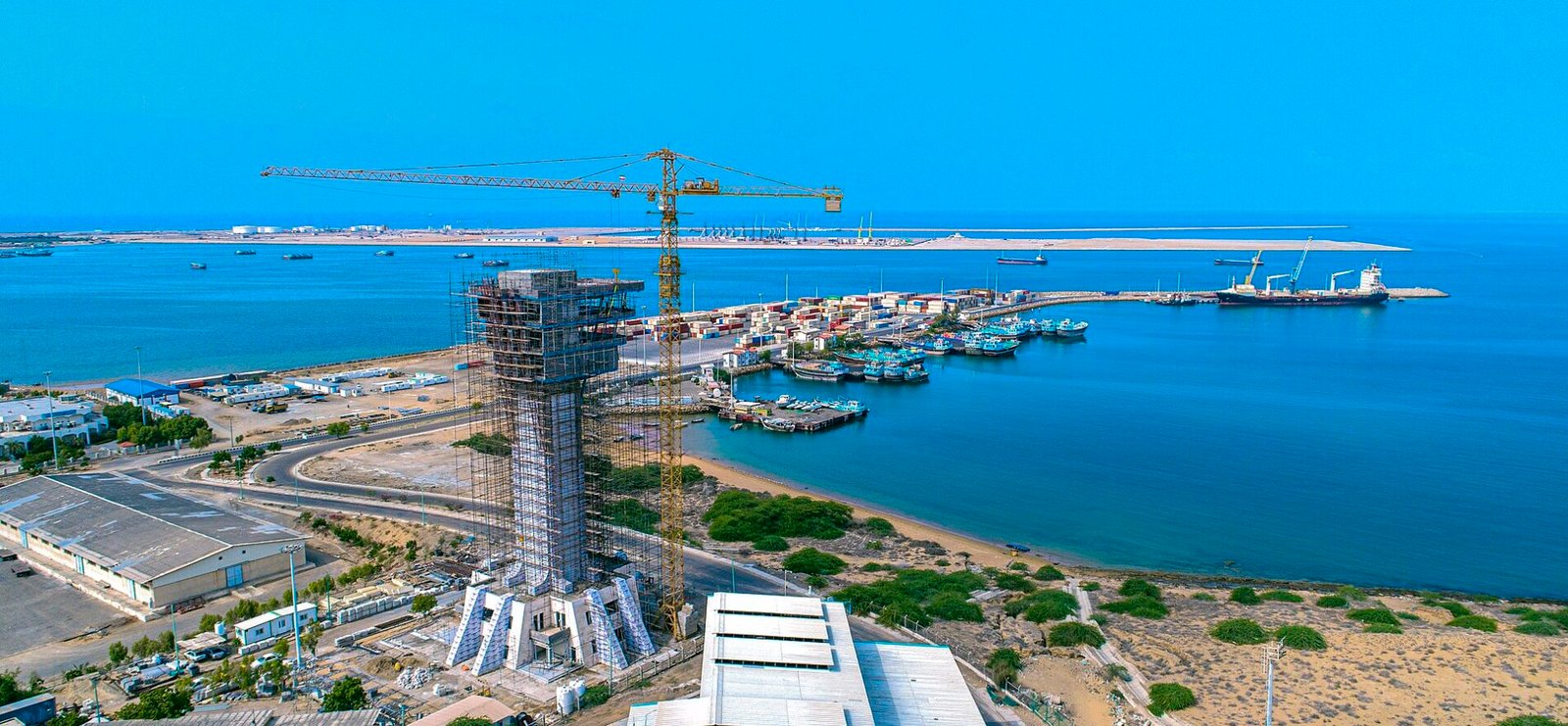
Chabahar Port, located on the Gulf of Oman in southeastern Iran, is a deep-water port comprising two main terminals: Shahid Kalantari and Shahid Beheshti. India has been actively involved in developing the Shahid Beheshti terminal since formal agreements were initiated in 2003. A significant milestone was reached in May 2016, when India, Iran, and Afghanistan signed a trilateral agreement to establish the International Transport and Transit Corridor, with Chabahar as a regional hub (The Hindu). In May 2024, India and Iran signed a 10-year contract, with Indian Ports Global Ltd. (IPGL) committing approximately $120 million for port equipment and offering a $250 million credit line for infrastructure development (Reuters).
The port’s strategic importance lies in its ability to provide India with an alternative trade route to Afghanistan and Central Asia, circumventing Pakistan. It also serves as a counterbalance to China’s investment in Pakistan’s Gwadar Port, located approximately 80 km from Chabahar (India Today). Since 2018, Chabahar has handled significant cargo, including 450 vessels, 134,082 TEUs of container cargo, and 8.7 million tonnes of bulk and general cargo, with cargo handling increasing from 1.2 million tonnes in FY21 to 2.84 million tonnes in FY24 (Maritime Gateway). Plans are underway to expand the port’s capacity from 100,000 TEUs to 500,000 TEUs and connect it to Iran’s rail network by mid-2026 (India Shipping News).
Recent Iran-Israel Conflict
On June 13, 2025, Israel launched airstrikes targeting over 200 sites in Iran, including nuclear facilities and military leadership, in an effort to curb Iran’s nuclear ambitions (Indian News Network). Iran retaliated with multiple waves of long-range missile attacks on Israeli cities, including Tel Aviv and Jerusalem, triggering widespread sirens and causing damage (Reuters; DW). This escalation marks a significant intensification of the longstanding Iran-Israel rivalry, raising global concerns about regional security and the potential for broader conflict, particularly involving the Strait of Hormuz, a critical chokepoint for oil shipments (Al Jazeera).
Impact on Indian Interests
Security Risks
The Iran-Israel conflict introduces considerable security risks to the region, which could affect the Chabahar Port and Indian personnel involved in its operations. Although the port is located in southeastern Iran, far from the primary conflict zones such as Tehran’s nuclear facilities, the broader instability could pose threats to infrastructure and personnel safety. The Indian Ministry of External Affairs issued advisories on June 13, 2025, urging Indian nationals in Iran to exercise caution and adhere to local security protocols (Times of India). Approximately 10,000 Indians reside in Iran, including workers and professionals potentially involved in Chabahar’s operations (Live Mint). While no direct attacks on Chabahar have been reported, the conflict’s potential to escalate could necessitate enhanced security measures, increasing operational costs and complexity.
Sanctions and Diplomatic Challenges
U.S. sanctions on Iran have historically posed challenges to international projects involving the country, including Chabahar. In 2018, the U.S. granted a sanctions waiver for Chabahar under the Iran Freedom and Counter-Proliferation Act, recognizing its importance for Afghanistan’s humanitarian and economic development (FDD). However, on February 6, 2025, an executive order directed the U.S. Secretary of State to modify or rescind sanctions waivers, including those for Chabahar, raising concerns about India’s $370 million investment (Modern Diplomacy). As of June 2025, no definitive action has been taken to impose sanctions specifically on Chabahar, partly due to ongoing U.S.-Iran nuclear negotiations (Maritime Gateway). Nevertheless, the threat of secondary sanctions remains, as highlighted by recent U.S. actions targeting Iran’s shadow banking and oil networks (Reuters).
India’s 2025-26 Union Budget allocated ₹100 crore (approximately $12 million) for Chabahar’s expansion, signaling continued commitment despite sanctions risks (International Affairs Review). However, X posts from June 2025 suggest public concern that U.S. pressure is undermining Indian investments, with some alleging attempts to derail the project (X post by @bonitokumar12; X post by @maybe_ghuf). India must navigate this complex landscape, balancing its strategic partnership with Iran against its alliances with the U.S. and Israel, which supplies critical defense equipment (The Hindu Business Line).
Trade and Operational Disruptions
The conflict’s potential to disrupt maritime trade routes is a significant concern for Chabahar’s operations. The Strait of Hormuz, located between the Persian Gulf and the Gulf of Oman, is a vital chokepoint through which about one-fifth of the world’s oil passes (BBC). Iran has previously threatened to close the strait in retaliation for Western pressure, and the recent conflict has heightened fears of such disruptions (Times of Israel). While Chabahar Port, situated on the Gulf of Oman, does not directly rely on the Strait of Hormuz for access from the Indian Ocean, regional instability could increase shipping risks, insurance costs, and operational challenges. For instance, Greece and the UK have advised ships to avoid the strait, indicating broader maritime security concerns (Reuters).
A blockage of the Strait of Hormuz could also disrupt Chabahar’s role in facilitating trade with Central Asia and projects like the Turkmenistan–Afghanistan–Pakistan–India (TAPI) pipeline (Sputnik News). Furthermore, the conflict has driven up global oil prices, which could strain India’s economy and indirectly affect funding for infrastructure projects like Chabahar (Economic Times). Despite these risks, Chabahar remains operational, with plans for significant upgrades, including rail connectivity by mid-2026 (Hasht-e Subh).
Geopolitical Implications
India’s close relations with Iran, Israel, and the U.S. place it in a delicate position amid the conflict. Iran is a strategic partner for connectivity and energy, while Israel provides advanced defense technology, and the U.S. is a key ally in trade and security (Deccan Herald). The conflict requires India to maintain a neutral stance, as evidenced by its June 13, 2025, statement expressing “deep concern” and urging restraint (MEA). India’s simultaneous investment in Israel’s Haifa Port by the Adani Group further complicates its position, potentially straining ties with Iran (Stimson).
The Chabahar project is integral to India’s International North-South Transport Corridor (INSTC), which enhances connectivity with Russia and Eurasia (Drishti IAS). Any disruption to Chabahar could undermine this corridor, forcing India to rely on less favorable routes through Pakistan or China (Sunday Guardian Live). Additionally, China’s growing influence in Iran, including potential investments in the Makran coast, poses a competitive challenge to India’s regional ambitions (Special Eurasia). India must leverage its diplomatic agility to protect its interests while fostering stability in the region.
Conclusion
The Iran-Israel conflict of June 2025 presents multifaceted challenges to India’s interests in Iran, particularly the Chabahar Port Development project. Security risks, while not directly impacting the port, necessitate heightened vigilance. The threat of U.S. sanctions, though not yet realized, looms large, requiring careful diplomatic navigation. Potential trade disruptions, driven by regional instability and oil price volatility, could hinder Chabahar’s operations and India’s broader economic goals. Geopolitically, India faces the complex task of balancing its relations with Iran, Israel, and the U.S. while safeguarding its strategic investments.
Despite these challenges, Chabahar Port remains operational, with India demonstrating resilience through continued investments and plans for expansion. The 2025-26 Union Budget allocation and ongoing rail connectivity projects underscore India’s commitment to the port’s strategic value. Moving forward, India will need to employ adept diplomacy, strengthen regional partnerships, and monitor U.S.-Iran developments to ensure the project’s success. The Chabahar Port remains a critical gateway to Central Asia, and its viability will depend on India’s ability to navigate the turbulent geopolitical landscape shaped by the Iran-Israel conflict.
Visited 14 times, 1 visit(s) today
Discover more from CRISA
Subscribe to get the latest posts sent to your email.
All material appearing on the CRISA website ("content") is protected by copyright under Indian Copyright laws and is the property of CRISA. You may not copy, reproduce, distribute, publish, display, perform, modify, create derivative works, transmit, or in any way exploit any such content, nor may you distribute any part of this content over any network, including a local area network, sell or offer it for sale, or use such content to construct any kind of database.
Discover more from CRISA
Subscribe now to keep reading and get access to the full archive.


Introduction
The Chabahar Port Development project represents a pivotal element of India’s strategic vision to enhance connectivity with Afghanistan and Central Asia, bypassing Pakistan. Situated in Iran’s Sistan-Baluchistan province, this port facilitates trade and strengthens India’s geopolitical presence in the region. However, the escalation of tensions between Iran and Israel in June 2025, characterized by Israeli airstrikes on Iranian nuclear facilities and Iran’s retaliatory missile attacks, has introduced significant uncertainties. This conflict threatens regional stability, potentially impacting India’s interests in Iran, particularly the Chabahar Port project. This article examines the multifaceted implications of the conflict on India’s strategic and economic objectives, focusing on security, sanctions, trade disruptions, and diplomatic challenges.
Background
Chabahar Port Development Project
Chabahar Port, located on the Gulf of Oman in southeastern Iran, is a deep-water port comprising two main terminals: Shahid Kalantari and Shahid Beheshti. India has been actively involved in developing the Shahid Beheshti terminal since formal agreements were initiated in 2003. A significant milestone was reached in May 2016, when India, Iran, and Afghanistan signed a trilateral agreement to establish the International Transport and Transit Corridor, with Chabahar as a regional hub (The Hindu). In May 2024, India and Iran signed a 10-year contract, with Indian Ports Global Ltd. (IPGL) committing approximately $120 million for port equipment and offering a $250 million credit line for infrastructure development (Reuters).
The port’s strategic importance lies in its ability to provide India with an alternative trade route to Afghanistan and Central Asia, circumventing Pakistan. It also serves as a counterbalance to China’s investment in Pakistan’s Gwadar Port, located approximately 80 km from Chabahar (India Today). Since 2018, Chabahar has handled significant cargo, including 450 vessels, 134,082 TEUs of container cargo, and 8.7 million tonnes of bulk and general cargo, with cargo handling increasing from 1.2 million tonnes in FY21 to 2.84 million tonnes in FY24 (Maritime Gateway). Plans are underway to expand the port’s capacity from 100,000 TEUs to 500,000 TEUs and connect it to Iran’s rail network by mid-2026 (India Shipping News).
Recent Iran-Israel Conflict
On June 13, 2025, Israel launched airstrikes targeting over 200 sites in Iran, including nuclear facilities and military leadership, in an effort to curb Iran’s nuclear ambitions (Indian News Network). Iran retaliated with multiple waves of long-range missile attacks on Israeli cities, including Tel Aviv and Jerusalem, triggering widespread sirens and causing damage (Reuters; DW). This escalation marks a significant intensification of the longstanding Iran-Israel rivalry, raising global concerns about regional security and the potential for broader conflict, particularly involving the Strait of Hormuz, a critical chokepoint for oil shipments (Al Jazeera).
Impact on Indian Interests
Security Risks
The Iran-Israel conflict introduces considerable security risks to the region, which could affect the Chabahar Port and Indian personnel involved in its operations. Although the port is located in southeastern Iran, far from the primary conflict zones such as Tehran’s nuclear facilities, the broader instability could pose threats to infrastructure and personnel safety. The Indian Ministry of External Affairs issued advisories on June 13, 2025, urging Indian nationals in Iran to exercise caution and adhere to local security protocols (Times of India). Approximately 10,000 Indians reside in Iran, including workers and professionals potentially involved in Chabahar’s operations (Live Mint). While no direct attacks on Chabahar have been reported, the conflict’s potential to escalate could necessitate enhanced security measures, increasing operational costs and complexity.
Sanctions and Diplomatic Challenges
U.S. sanctions on Iran have historically posed challenges to international projects involving the country, including Chabahar. In 2018, the U.S. granted a sanctions waiver for Chabahar under the Iran Freedom and Counter-Proliferation Act, recognizing its importance for Afghanistan’s humanitarian and economic development (FDD). However, on February 6, 2025, an executive order directed the U.S. Secretary of State to modify or rescind sanctions waivers, including those for Chabahar, raising concerns about India’s $370 million investment (Modern Diplomacy). As of June 2025, no definitive action has been taken to impose sanctions specifically on Chabahar, partly due to ongoing U.S.-Iran nuclear negotiations (Maritime Gateway). Nevertheless, the threat of secondary sanctions remains, as highlighted by recent U.S. actions targeting Iran’s shadow banking and oil networks (Reuters).
India’s 2025-26 Union Budget allocated ₹100 crore (approximately $12 million) for Chabahar’s expansion, signaling continued commitment despite sanctions risks (International Affairs Review). However, X posts from June 2025 suggest public concern that U.S. pressure is undermining Indian investments, with some alleging attempts to derail the project (X post by @bonitokumar12; X post by @maybe_ghuf). India must navigate this complex landscape, balancing its strategic partnership with Iran against its alliances with the U.S. and Israel, which supplies critical defense equipment (The Hindu Business Line).
Trade and Operational Disruptions
The conflict’s potential to disrupt maritime trade routes is a significant concern for Chabahar’s operations. The Strait of Hormuz, located between the Persian Gulf and the Gulf of Oman, is a vital chokepoint through which about one-fifth of the world’s oil passes (BBC). Iran has previously threatened to close the strait in retaliation for Western pressure, and the recent conflict has heightened fears of such disruptions (Times of Israel). While Chabahar Port, situated on the Gulf of Oman, does not directly rely on the Strait of Hormuz for access from the Indian Ocean, regional instability could increase shipping risks, insurance costs, and operational challenges. For instance, Greece and the UK have advised ships to avoid the strait, indicating broader maritime security concerns (Reuters).
A blockage of the Strait of Hormuz could also disrupt Chabahar’s role in facilitating trade with Central Asia and projects like the Turkmenistan–Afghanistan–Pakistan–India (TAPI) pipeline (Sputnik News). Furthermore, the conflict has driven up global oil prices, which could strain India’s economy and indirectly affect funding for infrastructure projects like Chabahar (Economic Times). Despite these risks, Chabahar remains operational, with plans for significant upgrades, including rail connectivity by mid-2026 (Hasht-e Subh).
Geopolitical Implications
India’s close relations with Iran, Israel, and the U.S. place it in a delicate position amid the conflict. Iran is a strategic partner for connectivity and energy, while Israel provides advanced defense technology, and the U.S. is a key ally in trade and security (Deccan Herald). The conflict requires India to maintain a neutral stance, as evidenced by its June 13, 2025, statement expressing “deep concern” and urging restraint (MEA). India’s simultaneous investment in Israel’s Haifa Port by the Adani Group further complicates its position, potentially straining ties with Iran (Stimson).
The Chabahar project is integral to India’s International North-South Transport Corridor (INSTC), which enhances connectivity with Russia and Eurasia (Drishti IAS). Any disruption to Chabahar could undermine this corridor, forcing India to rely on less favorable routes through Pakistan or China (Sunday Guardian Live). Additionally, China’s growing influence in Iran, including potential investments in the Makran coast, poses a competitive challenge to India’s regional ambitions (Special Eurasia). India must leverage its diplomatic agility to protect its interests while fostering stability in the region.
Conclusion
The Iran-Israel conflict of June 2025 presents multifaceted challenges to India’s interests in Iran, particularly the Chabahar Port Development project. Security risks, while not directly impacting the port, necessitate heightened vigilance. The threat of U.S. sanctions, though not yet realized, looms large, requiring careful diplomatic navigation. Potential trade disruptions, driven by regional instability and oil price volatility, could hinder Chabahar’s operations and India’s broader economic goals. Geopolitically, India faces the complex task of balancing its relations with Iran, Israel, and the U.S. while safeguarding its strategic investments.
Despite these challenges, Chabahar Port remains operational, with India demonstrating resilience through continued investments and plans for expansion. The 2025-26 Union Budget allocation and ongoing rail connectivity projects underscore India’s commitment to the port’s strategic value. Moving forward, India will need to employ adept diplomacy, strengthen regional partnerships, and monitor U.S.-Iran developments to ensure the project’s success. The Chabahar Port remains a critical gateway to Central Asia, and its viability will depend on India’s ability to navigate the turbulent geopolitical landscape shaped by the Iran-Israel conflict.
Discover more from CRISA
Subscribe to get the latest posts sent to your email.
Lessons from Ukraine’s Drone Attack for India’s Defense Strategy