India’s Aerial Triumph: How IAF Neutralized Pakistan’s Air Defenses in a Historic 23-Minute Blitz
HomeCommentaryIndia’s Aerial Triumph: How IAF Neutralized Pakistan’s Air Defenses in a Historic 23-Minute Blitz
Discover India’s historic 23-minute aerial triumph as the IAF neutralizes 12 Pakistan Air Force bases and radar sites using BrahMos and SCALP missiles, showcasing unmatched dominance and exposing flaws in Chinese defense systems.
In a stunning display of military precision and technological superiority, the Indian Air Force (IAF) executed a breathtaking operation that has been dubbed the world’s most spectacular Suppression of Enemy Air Defenses (SEAD) and Destruction of Enemy Air Defenses (DEAD) mission in history. In less than 23 minutes, India neutralized 12 critical forward radar sites and Pakistan Air Force (PAF) bases, effectively crippling Pakistan’s air defense capabilities and asserting unrivaled dominance in the region. This operation, reportedly in response to Pakistan’s aggressive maneuvers under Operation Sindoor, showcased India’s advanced weaponry, strategic planning, and unmatched execution, leaving the PAF in disarray and exposing significant vulnerabilities in Pakistan’s defense systems, including Chinese-manufactured equipment.
The Spark: Pakistan’s Attempt to Overwhelm Indian Defenses
The operation was triggered by Pakistan’s attempt to overwhelm India’s air defense systems with a massive barrage of drones and rockets. This aggressive move was intended to test India’s resilience and potentially expose weaknesses in its air defense network. However, the IAF’s response was swift, decisive, and devastating, turning the tables on Pakistan and demonstrating the futility of such an approach against India’s sophisticated defense mechanisms.
Pakistan’s strategy relied heavily on its forward-deployed radar sites at Arifwala, Chunian, and Pasrur, which served as the “eyes” of its air defense network. These sites were critical for detecting incoming threats and coordinating defensive measures. Recognizing their importance, the IAF prioritized their destruction to blind Pakistan’s air defense system and pave the way for further operations.
Phase One: Neutralizing Pakistan’s Forward Eyes
The IAF employed Harop drones and precision-guided missiles to target and destroy the radar sites at Arifwala, Chunian, and Pasrur. Harop drones, known for their loitering capability and precision strikes, were instrumental in neutralizing these critical assets. These drones, often referred to as “kamikaze drones,” are designed to locate and destroy high-value targets such as radar installations by crashing into them with explosive payloads. Their deployment ensured that Pakistan’s air defense network was effectively blinded within minutes, leaving the PAF unable to detect or respond to incoming threats.
IAI Harop Drone
The destruction of these radar sites was a masterstroke, as it crippled Pakistan’s ability to coordinate its air defenses and monitor Indian air activities. This initial phase set the stage for the IAF’s subsequent attacks, ensuring that Pakistan’s air defense capabilities were severely compromised from the outset.
Phase Two: Crippling the Backbone of the PAF
With Pakistan’s radar network neutralized, the IAF moved swiftly to dismantle the backbone of the Pakistan Air Force by targeting key air bases, including Nur Khan, Murid, Sargodha, Rahim Yar Khan, Jacobabad, Sukkur, Bhalori, Rafiqui, and Sialkot. The IAF focused on destroying runways and command-and-control (C2) units at these bases, rendering them inoperable for air operations. The destruction of runways prevented the PAF from launching fighter jets or other aircraft, while the elimination of C2 units disrupted Pakistan’s ability to coordinate its forces and mount a counteroffensive.
Rahim Yar Khan Airbase | Source – Maxar Tech/NDTV
The IAF’s use of precision-guided munitions, including the BrahMos supersonic cruise missile and the SCALP missile, was pivotal in this phase. The BrahMos, a joint Indo-Russian missile known for its speed and accuracy, proved to be a game-changer. With a range of approximately 290 kilometers and the ability to travel at speeds up to Mach 3, the BrahMos was able to strike targets with pinpoint accuracy, evading Pakistan’s air defense systems. The SCALP missile, a long-range, air-launched cruise missile, complemented the BrahMos by targeting hardened infrastructure and command centers.
Remarkably, India achieved this devastating blow using only 15 BrahMos missiles, underscoring the efficiency and lethality of its arsenal. The destruction of these key bases ensured that the PAF was grounded, unable to escalate the situation or launch offensive operations against India.
The Failure of Pakistan’s Air Defense Systems
One of the most significant outcomes of this operation was the complete failure of Pakistan’s air defense systems, particularly those supplied by China. Systems such as the HQ-9B, HQ-9P, and HQ-16, which were touted as advanced surface-to-air missile (SAM) systems, proved ineffective against the IAF’s onslaught. None of these systems were able to protect Pakistan’s bases from the BrahMos and SCALP missiles, highlighting a significant vulnerability in Chinese-manufactured defense technology.
Chinese HQ-9 Air Defence System
Pakistan’s rockets and missiles were equally ineffective against India’s robust air defense systems, which include advanced SAMs like the S-400 and indigenous systems such as the Akash. These systems successfully intercepted and neutralized incoming threats, ensuring that Pakistan’s barrage of drones and rockets caused minimal damage. The stark contrast between India’s defensive capabilities and Pakistan’s inability to protect its assets underscored the technological and strategic gap between the two nations.
IAF’s Unrivaled Dominance
The success of this operation cemented the IAF’s reputation as a formidable force in modern warfare. By neutralizing Pakistan’s radar sites, air bases, and command infrastructure in under 23 minutes, the IAF demonstrated unparalleled speed, precision, and coordination. The operation not only crippled the PAF’s ability to respond but also sent a clear message to adversaries about India’s military prowess.
BrahMos, supersonic cruise missile successfully test firing as part of service life extension programme, from the Integrated Test Range (ITR), in Balasore, Odisha on May 21, 2018.
The use of advanced weaponry like the BrahMos and SCALP missiles, combined with the strategic deployment of Harop drones, showcased India’s technological edge and its ability to execute complex SEAD and DEAD missions with surgical precision. The failure of Pakistan’s Chinese-supplied defense systems further highlighted the superiority of India’s military strategy and equipment.
Conclusion: A New Era of Aerial Dominance
India’s 23-minute blitz against Pakistan’s air defenses was a historic achievement that redefined aerial warfare in the region. By neutralizing 12 radar sites and PAF bases, the IAF not only thwarted Pakistan’s aggressive maneuvers but also exposed the limitations of its defense systems. The operation underscored the importance of advanced technology, meticulous planning, and rapid execution in modern warfare.
Indian Air Force
With its air defenses in tatters and its bases rendered inoperable, Pakistan was left without the means to protect its airspace or launch offensive operations. The IAF’s dominance was absolute, marking a turning point in the India-Pakistan military dynamic. As the world watches, India’s aerial triumph serves as a testament to its growing military power and its ability to decisively counter threats in the region.
This operation will undoubtedly be studied by military strategists and historians for years to come, as it represents a new benchmark in SEAD and DEAD missions. For now, India stands tall, its skies secure, and its air force unrivaled.
Visited 27 times, 1 visit(s) today
Discover more from CRISA
Subscribe to get the latest posts sent to your email.
All material appearing on the CRISA website ("content") is protected by copyright under Indian Copyright laws and is the property of CRISA. You may not copy, reproduce, distribute, publish, display, perform, modify, create derivative works, transmit, or in any way exploit any such content, nor may you distribute any part of this content over any network, including a local area network, sell or offer it for sale, or use such content to construct any kind of database.
Discover more from CRISA
Subscribe now to keep reading and get access to the full archive.

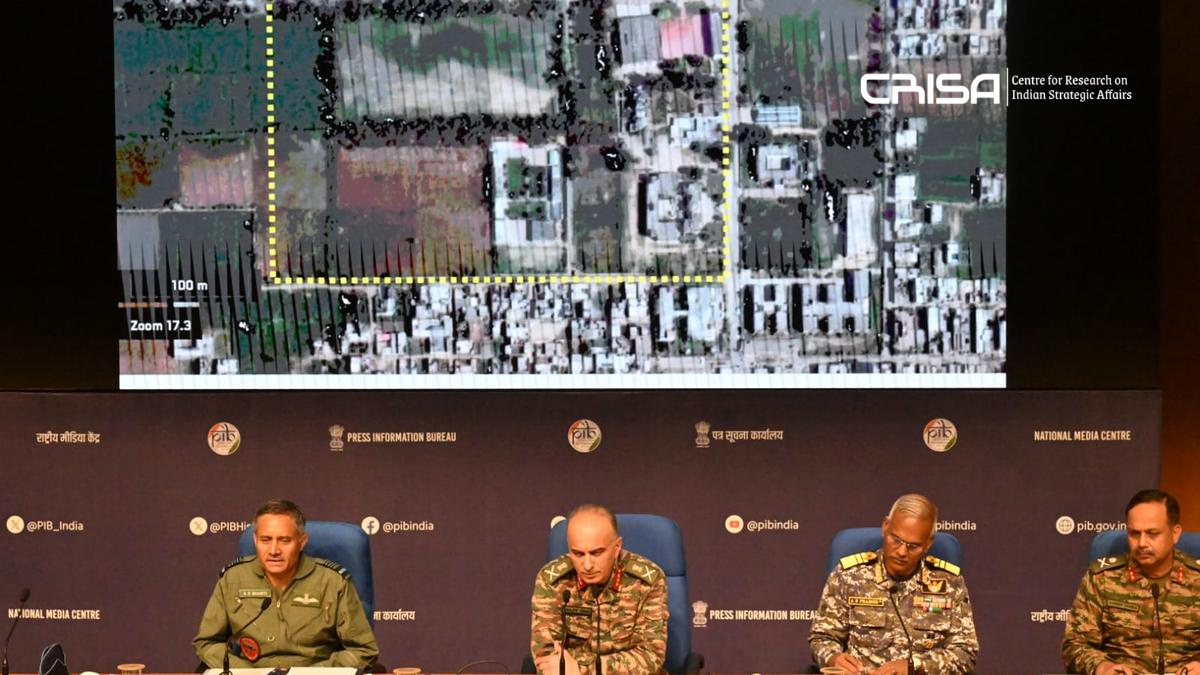

In a stunning display of military precision and technological superiority, the Indian Air Force (IAF) executed a breathtaking operation that has been dubbed the world’s most spectacular Suppression of Enemy Air Defenses (SEAD) and Destruction of Enemy Air Defenses (DEAD) mission in history. In less than 23 minutes, India neutralized 12 critical forward radar sites and Pakistan Air Force (PAF) bases, effectively crippling Pakistan’s air defense capabilities and asserting unrivaled dominance in the region. This operation, reportedly in response to Pakistan’s aggressive maneuvers under Operation Sindoor, showcased India’s advanced weaponry, strategic planning, and unmatched execution, leaving the PAF in disarray and exposing significant vulnerabilities in Pakistan’s defense systems, including Chinese-manufactured equipment.
The Spark: Pakistan’s Attempt to Overwhelm Indian Defenses
The operation was triggered by Pakistan’s attempt to overwhelm India’s air defense systems with a massive barrage of drones and rockets. This aggressive move was intended to test India’s resilience and potentially expose weaknesses in its air defense network. However, the IAF’s response was swift, decisive, and devastating, turning the tables on Pakistan and demonstrating the futility of such an approach against India’s sophisticated defense mechanisms.
Pakistan’s strategy relied heavily on its forward-deployed radar sites at Arifwala, Chunian, and Pasrur, which served as the “eyes” of its air defense network. These sites were critical for detecting incoming threats and coordinating defensive measures. Recognizing their importance, the IAF prioritized their destruction to blind Pakistan’s air defense system and pave the way for further operations.
Phase One: Neutralizing Pakistan’s Forward Eyes
The IAF employed Harop drones and precision-guided missiles to target and destroy the radar sites at Arifwala, Chunian, and Pasrur. Harop drones, known for their loitering capability and precision strikes, were instrumental in neutralizing these critical assets. These drones, often referred to as “kamikaze drones,” are designed to locate and destroy high-value targets such as radar installations by crashing into them with explosive payloads. Their deployment ensured that Pakistan’s air defense network was effectively blinded within minutes, leaving the PAF unable to detect or respond to incoming threats.
The destruction of these radar sites was a masterstroke, as it crippled Pakistan’s ability to coordinate its air defenses and monitor Indian air activities. This initial phase set the stage for the IAF’s subsequent attacks, ensuring that Pakistan’s air defense capabilities were severely compromised from the outset.
Phase Two: Crippling the Backbone of the PAF
With Pakistan’s radar network neutralized, the IAF moved swiftly to dismantle the backbone of the Pakistan Air Force by targeting key air bases, including Nur Khan, Murid, Sargodha, Rahim Yar Khan, Jacobabad, Sukkur, Bhalori, Rafiqui, and Sialkot. The IAF focused on destroying runways and command-and-control (C2) units at these bases, rendering them inoperable for air operations. The destruction of runways prevented the PAF from launching fighter jets or other aircraft, while the elimination of C2 units disrupted Pakistan’s ability to coordinate its forces and mount a counteroffensive.
The IAF’s use of precision-guided munitions, including the BrahMos supersonic cruise missile and the SCALP missile, was pivotal in this phase. The BrahMos, a joint Indo-Russian missile known for its speed and accuracy, proved to be a game-changer. With a range of approximately 290 kilometers and the ability to travel at speeds up to Mach 3, the BrahMos was able to strike targets with pinpoint accuracy, evading Pakistan’s air defense systems. The SCALP missile, a long-range, air-launched cruise missile, complemented the BrahMos by targeting hardened infrastructure and command centers.
Remarkably, India achieved this devastating blow using only 15 BrahMos missiles, underscoring the efficiency and lethality of its arsenal. The destruction of these key bases ensured that the PAF was grounded, unable to escalate the situation or launch offensive operations against India.
The Failure of Pakistan’s Air Defense Systems
One of the most significant outcomes of this operation was the complete failure of Pakistan’s air defense systems, particularly those supplied by China. Systems such as the HQ-9B, HQ-9P, and HQ-16, which were touted as advanced surface-to-air missile (SAM) systems, proved ineffective against the IAF’s onslaught. None of these systems were able to protect Pakistan’s bases from the BrahMos and SCALP missiles, highlighting a significant vulnerability in Chinese-manufactured defense technology.
Pakistan’s rockets and missiles were equally ineffective against India’s robust air defense systems, which include advanced SAMs like the S-400 and indigenous systems such as the Akash. These systems successfully intercepted and neutralized incoming threats, ensuring that Pakistan’s barrage of drones and rockets caused minimal damage. The stark contrast between India’s defensive capabilities and Pakistan’s inability to protect its assets underscored the technological and strategic gap between the two nations.
IAF’s Unrivaled Dominance
The success of this operation cemented the IAF’s reputation as a formidable force in modern warfare. By neutralizing Pakistan’s radar sites, air bases, and command infrastructure in under 23 minutes, the IAF demonstrated unparalleled speed, precision, and coordination. The operation not only crippled the PAF’s ability to respond but also sent a clear message to adversaries about India’s military prowess.
The use of advanced weaponry like the BrahMos and SCALP missiles, combined with the strategic deployment of Harop drones, showcased India’s technological edge and its ability to execute complex SEAD and DEAD missions with surgical precision. The failure of Pakistan’s Chinese-supplied defense systems further highlighted the superiority of India’s military strategy and equipment.
Conclusion: A New Era of Aerial Dominance
India’s 23-minute blitz against Pakistan’s air defenses was a historic achievement that redefined aerial warfare in the region. By neutralizing 12 radar sites and PAF bases, the IAF not only thwarted Pakistan’s aggressive maneuvers but also exposed the limitations of its defense systems. The operation underscored the importance of advanced technology, meticulous planning, and rapid execution in modern warfare.
With its air defenses in tatters and its bases rendered inoperable, Pakistan was left without the means to protect its airspace or launch offensive operations. The IAF’s dominance was absolute, marking a turning point in the India-Pakistan military dynamic. As the world watches, India’s aerial triumph serves as a testament to its growing military power and its ability to decisively counter threats in the region.
This operation will undoubtedly be studied by military strategists and historians for years to come, as it represents a new benchmark in SEAD and DEAD missions. For now, India stands tall, its skies secure, and its air force unrivaled.
Discover more from CRISA
Subscribe to get the latest posts sent to your email.
Operation Sindoor: How Indigenous Power and Strategic Precision Marked India’s Rise as a Global Force
India’s Kaveri Jet Engine Tests in Russia: A Leap Toward Aerospace Self-Reliance