Introduction
Naxalism, also known as Left-Wing Extremism (LWE), remains one of India’s most enduring internal security challenges, rooted in socio-economic disparities and Maoist ideology. Originating from the 1967 Naxalbari uprising in West Bengal, the movement has persisted in the “Red Corridor” across central and eastern India. Successive Indian governments have employed a dual strategy of security operations and developmental initiatives to counter this insurgency. Recent operations in 2024 and 2025, particularly in Chhattisgarh, have achieved significant breakthroughs, including the elimination of top Communist Party of India (Maoist) commanders like Basavaraju. This report analyzes these operations, their significance, their impact on national security, and the broader efforts of past and present governments to eradicate Naxalism, alongside developmental initiatives in affected areas.
Recent Successes in Anti-Naxal Operations
India’s security forces have made substantial progress in combating Naxalism in recent years, with 2024 and 2025 marking pivotal successes. A landmark operation was the Kanker encounter in April 2024, where 29 Naxalites, including senior CPI (Maoist) commander Shankar Rao, were neutralized in Chhattisgarh’s Kanker district. This operation in the Bastar region disrupted Maoist operational networks significantly.
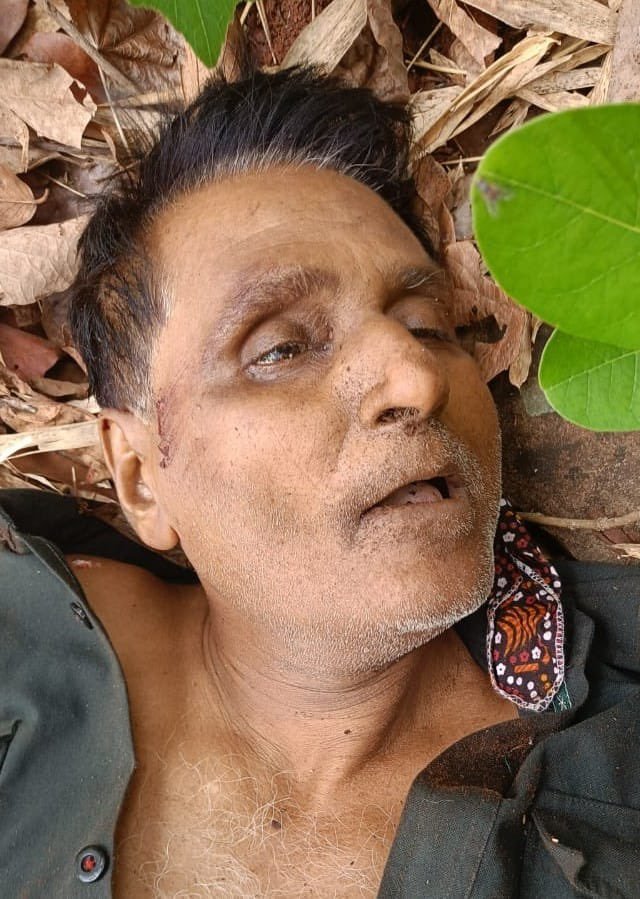
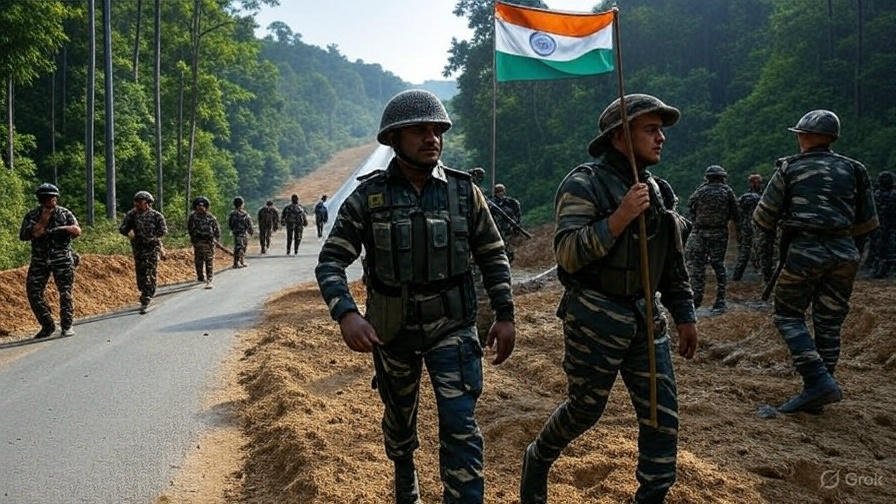
Another critical success was the elimination of CPI (Maoist) leader Basavaraju in November 2024, during an encounter in the Abujhmad forests of Narayanpur district, Chhattisgarh. Basavaraju, a Central Committee member and a key strategist with a ₹25 lakh bounty, was among 31 Naxalites killed in Operation Black Forest (Operation Kagar), concluded on May 14, 2025, near Karreguttalu Hill on the Chhattisgarh-Telangana border. This operation, one of the largest anti-Naxal campaigns, saw security forces reclaim a Maoist stronghold, symbolized by hoisting the national flag in the area. Union Home Minister Amit Shah reported that since January 2024, 237 Naxalites have been neutralized, 812 arrested, and 723 surrendered in Chhattisgarh, with 14 top commanders, including Basavaraju, eliminated in 2024 alone.
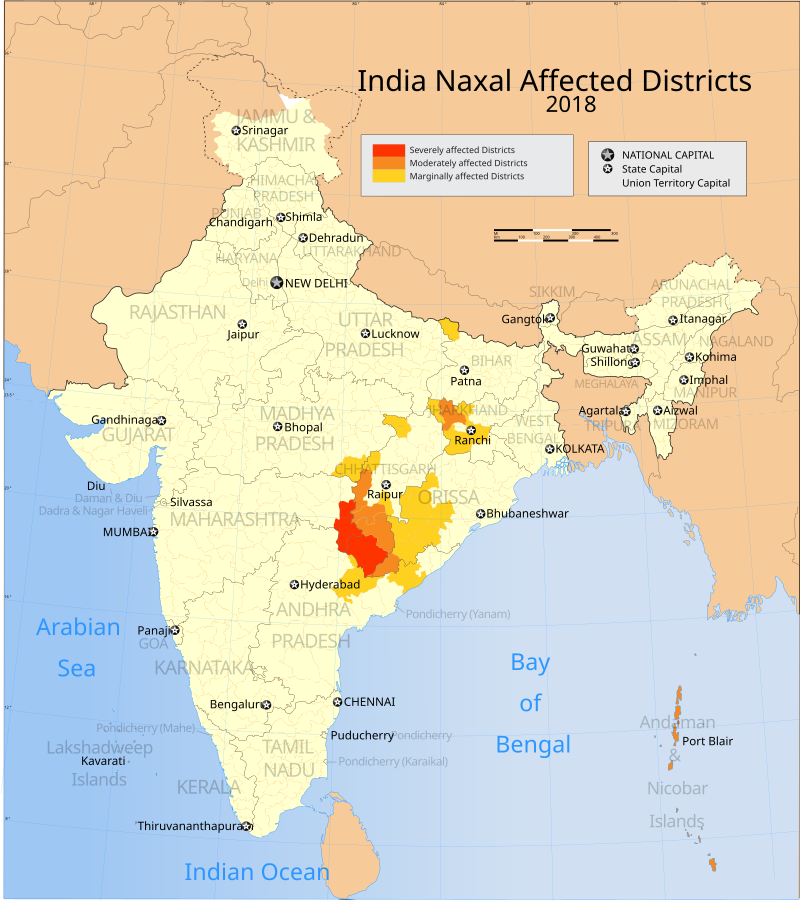
The geographical footprint of Naxalism has also contracted significantly. From 126 districts in 2013, only six districts remain heavily affected by April 2025, with 25 districts accounting for 85% of LWE violence, down from 96 in 2010. These operations have targeted high-ranking Maoist leaders, severely weakening the insurgency’s leadership and operational structure.
Significance of Recent Successes
The elimination of top commanders like Basavaraju and others has far-reaching implications:
- Disruption of Maoist Leadership: Basavaraju’s death, alongside other senior leaders, has crippled the CPI (Maoist)’s command structure. As a Central Committee member, his strategic role in planning attacks and recruitment made his elimination a significant setback for the Maoists.
- Reduction in Violence: The decline in Naxal-related incidents reflects the success of these operations. From 16,463 violent incidents between 2004 and 2014, the number dropped to 7,700 from 2014 to 2024, a 53% reduction. Security force and civilian casualties have decreased by 73% and 70%, respectively, with LWE-related deaths falling below 100 in 2022 for the first time in three decades.
- Restoration of State Authority: The establishment of 544 fortified police stations and 194 new security camps between 2014 and 2024 has strengthened government presence in remote areas. Operations like Kagar have reclaimed Maoist strongholds, enabling governance and development.
- Boost to Development: Neutralizing key figures like Basavaraju has created space for developmental projects in previously inaccessible areas, addressing socio-economic grievances that fuel Naxalism. Improved road and mobile connectivity has facilitated the delivery of government schemes, reducing the appeal of Maoist ideology.
Importance for National Security
Naxalism poses a multifaceted threat to India’s national security, as articulated by former Prime Minister Manmohan Singh, who called it the country’s “greatest internal security threat.” Its significance includes:
- Threat to Democracy: Naxalites aim to overthrow the state through armed rebellion, undermining democratic institutions. Their attacks on security forces, officials, and infrastructure disrupt governance and create lawless zones.
- Economic Impact: Naxal activities, including extortion and attacks on infrastructure, hinder economic development in resource-rich regions. The Maoists reportedly extort ₹14 billion annually, with 40% of their funding from the opium trade, fueling instability.
- Civilian Harm: Between 1980 and 2015, Naxalism caused 20,012 casualties, including 12,146 civilians, highlighting its toll on local populations. The continued threat necessitates robust counterinsurgency measures.
- External Linkages: Alleged foreign support from Chinese and Pakistani entities complicates the security landscape, requiring international cooperation to curb arms and funding flows.
The elimination of leaders like Basavaraju strengthens national security by dismantling the Maoist leadership, reducing violence, and enabling socio-economic integration of affected regions. The government’s goal to eliminate Naxalism by March 31, 2026, underscores its commitment to internal stability.
Government Efforts to Combat Naxalism
Present Government (2014–Present)
The Bharatiya Janata Party (BJP) government, led by Prime Minister Narendra Modi and Home Minister Amit Shah, has adopted an aggressive and multi-faceted approach:
- Security Operations:
- Operation Green Hunt: Continued from 2009, this operation deploys Central Armed Police Forces (CAPFs) and specialized units like CoBRA and Andhra Pradesh’s Greyhounds, with enhanced coordination in operations like Kagar.
- Operation SAMADHAN: This MHA doctrine emphasizes Smart leadership, Aggressive strategy, Motivation, Actionable intelligence, Dashboard-based KPIs, Harnessing technology, Action plans, and No access to financing, guiding operations like the one that eliminated Basavaraju.
- Infrastructure Enhancements: Fortified police stations and security camps, supported by UAVs and helicopters, have improved operational efficiency in remote areas.
- Developmental Initiatives:
- Aspirational Districts Programme: Launched in 2018, it targets underdeveloped districts, many Naxal-affected, with focus on education, healthcare, and infrastructure.
- Pradhan Mantri Gram Sadak Yojana (PMGSY): Improved road connectivity facilitates security operations and service delivery.
- Special Central Assistance (SCA): As of July 2021, ₹2,698 crore was allocated for 10,000 SCA projects, with 85% completion, boosting economic development.
- Surrender and Rehabilitation: Enhanced policies offering financial aid and vocational training have led to 723 surrenders in Chhattisgarh in 2024.
- Legal Measures:
- The Unlawful Activities (Prevention) Act (UAPA) bans Naxalite organizations, while the Forest Rights Act (2006) and PESA empower tribal communities, addressing grievances.
Previous Governments (Pre-2014)
The United Progressive Alliance (UPA) government (2004–2014) laid the groundwork for anti-Naxal strategies:
- Security Measures:
- Operation Green Hunt: Initiated in 2009, it aimed to clear Naxal strongholds but faced setbacks, such as the 2010 Chhattisgarh ambush killing over 80 personnel.
- Greyhounds: Andhra Pradesh’s specialized force reduced Maoist attacks from 600 in 2003 to 100 by 2010, serving as a model for other states.
- Developmental Efforts:
- Integrated Action Plan (IAP): Launched in 2010, it coordinated security and development in 83 districts, though implementation was hampered by corruption.
- MGNREGA, NRHM, and SSA: These programs targeted employment, healthcare, and education but faced challenges like poor follow-up and elite capture.
- Challenges: Coordination gaps, intelligence failures, and inadequate focus on tribal grievances limited the UPA’s success, with heavy-handed measures during the 1975 Emergency causing a temporary suppression but later resurgence.
Developmental Work in Naxal-Affected Areas
Beyond security operations, addressing socio-economic issues is critical to countering Naxalism:
- Infrastructure Development:
- PMGSY II: Expanded road networks, such as the 2025 bus service in Gadchiroli, Maharashtra, improve access to markets and services.
- Mobile connectivity counters Naxal attacks on telecom infrastructure, enhancing governance.
- Economic Empowerment:
- MGNREGA provides wage employment, reducing economic desperation.
- SRE Scheme: ₹1,992 crore allocated since 2014 supports training, publicity, and rehabilitation.
- Social Development:
- Forest Rights Act (2006) secures tribal rights, though inconsistent implementation displaces 10 million Adivasis due to development projects.
- NRHM and SSA improve healthcare and education, despite challenges like teacher absenteeism.
- Community Engagement:
- Civic Action Programme builds trust between security forces and locals.
- Surrender-cum-Rehabilitation Policy encourages reintegration with vocational training and financial support.
Challenges and Criticisms
Despite successes, challenges persist:
- Human Rights Concerns: Operations like the 2024 Bijapur encounter, where a six-month-old died, have drawn criticism from the National Human Rights Commission.
- Socio-Economic Issues: Poverty and displacement fuel discontent, with surveys in Andhra Pradesh indicating sympathy for Naxal motives.
- External Support: Alleged foreign backing requires enhanced international cooperation.
- Lack of Dialogue: Critics like T.S. Singh Deo advocate for peace talks, arguing that development prioritizing corporate interests alienates tribals.
Conclusion
The elimination of top CPI (Maoist) commanders like Basavaraju in 2024 and 2025 operations, such as Kankar and Kagar, has significantly weakened Naxalism, reducing its geographical and operational scope. These successes bolster national security by restoring governance, curbing violence, and enabling development in affected regions. The current government’s strategy, building on previous efforts, integrates aggressive security measures with developmental initiatives like PMGSY, MGNREGA, and the Aspirational Districts Programme. However, human rights concerns, persistent socio-economic issues, and the need for dialogue highlight the need for a balanced approach. As India aims for a Naxal-free nation by March 2026, sustaining security gains, addressing tribal grievances, and fostering inclusive development will be critical to achieving lasting peace.
Recommendations
- Enhance Intelligence: Use technology to improve operational precision and minimize civilian casualties.
- Strengthen Tribal Rights: Ensure robust implementation of the Forest Rights Act and PESA.
- Initiate Dialogue: Explore peace talks to complement security and development efforts.
- Sustain Development: Invest in education, healthcare, and infrastructure to counter Maoist ideology.
- Curb External Support: Enhance international cooperation to block foreign funding and arms.
By addressing these challenges, India can consolidate its gains and achieve a sustainable resolution to the Naxalite insurgency, fostering a secure and inclusive future.
Discover more from CRISA
Subscribe to get the latest posts sent to your email.